Best Peaks to Visit When Hiking in Austria
From non-technical Alpine hikes to via ferrata and glaciated summits, explore Austria’s best peaks by difficulty and region.

Anja
January 9, 2026
5 min read

Quick links
Austria's Alpine peaks offer something remarkable: world-class summit experiences accessible to hikers of virtually every ability level. This accessibility stems from Austria's exceptional mountain infrastructure—cable cars reaching high altitudes, well-maintained summit trails, mountain huts positioned for peak attempts, and a long tradition making peak experiences achievable for determined hikers, not just elite climbers.
This guide presents Austria's most rewarding peaks across five major mountain ranges—each offering distinct character, challenge levels, and unforgettable summit views.
Understanding Peak Categories
Not all mountain peaks require the same skills or preparation:
Non-technical Peaks
Hiking trails to summit—no climbing skills or specialized equipment required
Demand fitness and sure-footedness but accessible to determined hikers
Many reach impressive elevations (2,500-3,100m) with genuine Alpine summit experiences
Intermediate Peaks
Require via ferrata routes (fixed cables, ladders, steel rungs) or scrambling sections
Need via ferrata equipment or confidence using hands on rock
Exposed sections where falls have serious consequences
Demand confidence on exposure and experience with technical terrain
Technical Peaks
Require mountaineering skills: glacier travel, rope work, ice axe use
Serious Alpine objectives typically requiring certified guides
Covered in dedicated section below
For comprehensive guidance on preparing for Austrian Alpine hiking, see our Ultimate Guide to Hiking in Austria.
1. Stubai Alps
The Stubai Alps south of Innsbruck form one of Tyrol's most heavily glaciated ranges, offering excellent non-technical and intermediate peaks alongside technical glacier summits.
Location: South of Innsbruck, Tyrol
Highest peak: Zuckerhütl (3,507m)
Character: Heavily glaciated with dramatic ice-covered peaks rising above green valleys
Accessibility: Well-developed infrastructure with mountain huts and cable car access
Best known for: Stubai Glacier ski area and spectacular glacier panoramas
Main Peaks of the Region:

Habicht (3,277m)
The "Guardian of Stubai Valley" stands as the range's most prominent non-glaciated peak, its distinctive pyramid summit visible for miles. The normal route from Innsbrucker Hütte involves a long, exposed ridge with scrambling sections—technically straightforward but demanding sure-footedness and comfort with significant exposure. The summit delivers 360-degree views encompassing the Stubai Glacier, Ötztal Alps, and Zillertal ranges. Intermediate level: Scrambling required with exposure. Best season: July-September. Ascent time: 4-5 hours from Innsbrucker Hütte.

Serles (2,717m)
Known as the "High Altar of Tyrol" for its distinctive table-top summit plateau, Serles offers a steep but non-technical hiking route from the Stubai Valley floor. The trail gains 1,500m elevation in direct assault, making it a serious fitness challenge but requiring no technical skills. The flat summit plateau feels otherworldly—a grassy table in the sky with unobstructed views in every direction. Non-technical but demanding fitness. Best season: June-October. Ascent time: 4-5 hours from Maria Waldrast.

Elfer (2,505m)
The most accessible Stubai summit, Elfer combines cable car assistance with a final summit hike, making it achievable for moderate fitness levels. The Elferlift from Neustift eliminates the valley slog, leaving a scenic 90-minute hike to the summit cross. The panoramic platform at the top provides stunning views of the entire Stubai Valley and surrounding glaciated peaks—an excellent acclimatization peak or rest-day summit. Non-technical. Best season: June-October. Ascent time: 1.5 hours from lift station.
2. Ötztal Alps
The Ötztal Alps form Austria's second-highest range, characterized by extensive glaciation and a wilder, more serious atmosphere than the accessible Stubai region.
Location: Western Tyrol, bordering Italy
Highest peak: Wildspitze (3,768m) - Austria's second-highest
Character: Remote valleys, extensive glacier coverage, serious high-altitude wilderness
Historical note: Site of Ötzi the Iceman discovery (3,210m elevation)
Technical range: Mostly glaciated peaks requiring mountaineering skills; limited non-technical options
Main Peaks of the Region:

Hohe Mut (2,653m)
This panoramic summit above Obergurgl offers non-technical hiking with extraordinary views across the Ötztal's glaciated giants. The trail from Ramolhaus follows a well-maintained ridge with moderate exposure, gaining roughly 600m elevation in 2-3 hours. The summit cross sits on a narrow platform with dramatic drop-offs on all sides—exhilarating but safe for hikers comfortable with exposure. Wildspitze, Austria's second-highest peak, dominates views to the south. Non-technical with some exposure. Best season: July-September. Ascent: 2-3 hours from Ramolhaus.

Schwarze Schneid (3,370m)
One of the highest non-glaciated peaks in the Eastern Alps, Schwarze Schneid challenges fit, experienced hikers with rocky terrain, sustained scrambling, and a long approach. The route from Hochstubaihütte involves 8-10 hours round trip with exposed ridge sections requiring confident scrambling and absolute sure-footedness. The elevation makes this a genuine 3,000m+ achievement without glacier skills. Advanced level—only for very experienced mountain hikers. Best season: July-August.

Fundusfeiler (3,079m)
This rocky pyramid offers a challenging ridge scramble from Ramolhaus, with exposed sections and loose rock demanding care. The 3,000m+ elevation provides that psychological milestone while remaining technically achievable for strong scramblers. Views encompass the entire Ötztal glacier landscape including Wildspitze and Weißkugel. The remote position means fewer hikers than more accessible peaks—often you'll have the summit to yourself. Intermediate level with scrambling. Best season: July-September. Ascent time: 5-6 hours from Ramolhaus.
3. Hohe Tauern Range
The Hohe Tauern encompasses Austria's most dramatic Alpine landscape and the country's largest national park, offering exceptional non-technical 3,000m+ peaks—a rarity in the Alps.
Location: Spans Carinthia, Salzburg, and Tyrol (East Tyrol)
Highest peak: Grossglockner (3,798m) - Austria's highest mountain
Range scale: Over 300 peaks above 3,000m
National Park: Established 1981-1991, covering 1,856 square kilometers
Wildlife: Chamois, ibex, golden eagles, marmots in protected wilderness
Geological note: Contains Austria's most extensive glacier systems including Pasterze Glacier (8km long)
For detailed seasonal planning, consult our Weather Guide for Hiking in Austria.
Main Peaks of the Region:

Hoher Sonnblick (3,106m)
This accessible 3,000m+ summit hosts Austria's highest weather observatory, making it one of the Alps' most unique peaks. The non-technical hiking route from Kolm-Saigurn involves a long approach (5-6 hours) with sustained elevation gain but no scrambling or exposure. The observatory buildings at the summit create a surreal scene—scientific infrastructure at genuine Alpine altitude. On clear days, views extend 100+ kilometers across the Eastern Alps. Non-technical. Best season: July-September. Ascent: 5-6 hours from valley.

Schareck (3,122m)
The "Beautiful Corner" (Schöne Ecke) lives up to its name with a non-technical route reaching above 3,100m—remarkable for a pure hiking peak. The approach from the Bad Gastein ski area uses summer lift access to eliminate valley elevation, leaving a challenging but non-technical summit push. The position provides spectacular views of Grossglockner and the Hohe Tauern's glaciated core. Popular with hikers seeking 3,000m+ elevation without glacier travel. Non-technical. Best season: July-September. Ascent: 3-4 hours from lift station.

Mölltaler Polinik (2,784m)
This accessible Hohe Tauern summit in the Reisseck range offers a moderate hike with exceptional summit panoramas across the national park. The route from Reisseck mountain station involves well-maintained trails with minimal exposure, making it suitable for intermediate hikers building confidence for higher peaks. The 360-degree views include Grossglockner, the Venediger Group, and the Schober peaks. Non-technical. Best season: June-September. Ascent time: 3-4 hours from Reisseck station.
4. Karwendel & Northern Limestone Alps
The Northern Limestone Alps create Austria's most distinctive mountain landscapes with vertical white rock walls, dramatic ridges, and exceptional proximity to major cities like Innsbruck.
Location: Northern Tyrol, extending to German border
Highest peak: Birkkarspitze (2,749m)
Character: Limestone geology creating sharp ridges, vertical walls, and dramatic exposure
Protected area: Karwendel Nature Park (727 square kilometers) - Austria's largest nature reserve
Accessibility: Direct cable car access from Innsbruck city center to 2,334m
Historical note: Established as protected area in 1928, preserving remote character despite urban proximity
Main Peaks of the Region:

Hafelekar (2,334m)
The most accessible high Alpine viewpoint in Austria, Hafelekar reaches 2,334m directly from Innsbruck via cable car—no hiking required. For those wanting summit achievement, a short 30-minute hike from the station reaches the actual peak. The position on the Karwendel's southern edge provides unparalleled views across Innsbruck, the Inn Valley, and south toward the Stubai and Zillertal Alps. Ideal for acclimatization, weather checking, or summit views without major effort. Non-technical (cable car accessible). Accessible: Year-round via Nordkette cable car.

Zugspitze (2,962m)
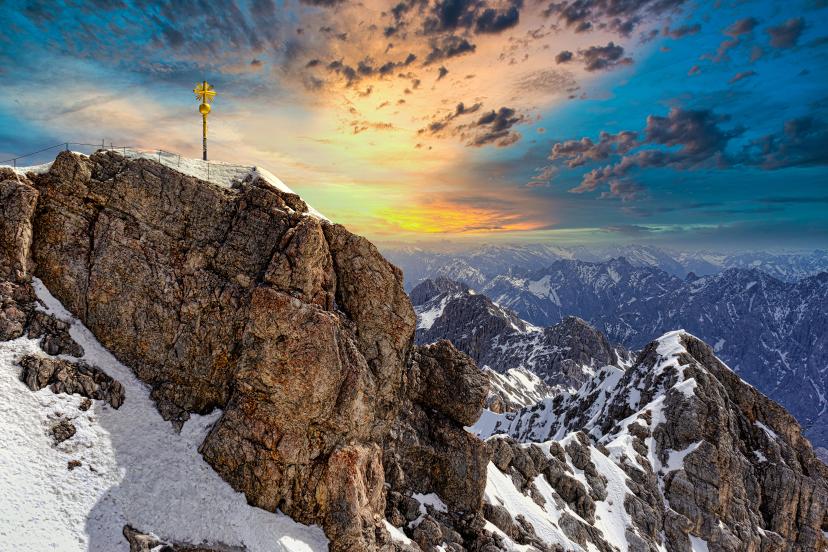
Germany's highest peak straddles the Austrian-German border, offering multiple route options from easy to challenging. The cable car from Austrian side reaches the summit with zero hiking for those wanting the "highest peak" experience without effort. Alternatively, via ferrata routes from the Austrian approach provide protected climbing with cables, ladders, and spectacular exposure for those seeking adventure. The summit panorama is legendary—400+ peaks visible on clear days. Non-technical via cable car; intermediate via ferrata options. Best season: June-October for via ferrata routes.

Birkkarspitze (2,749m)
The highest peak in the Karwendel range, Birkkarspitze demands serious commitment—a long approach through the Karwendel's remote interior followed by exposed limestone ridge scrambling. This is not a casual summit—expect 8-10 hours round trip from the closest hut, with significant exposure and loose rock requiring constant attention. The wilderness position and dramatic 360-degree views across the entire Karwendel plateau make this a coveted prize for experienced scramblers. Advanced level—only for very experienced hikers. Best season: July-September.
5. Dachstein & Salzkammergut Alps
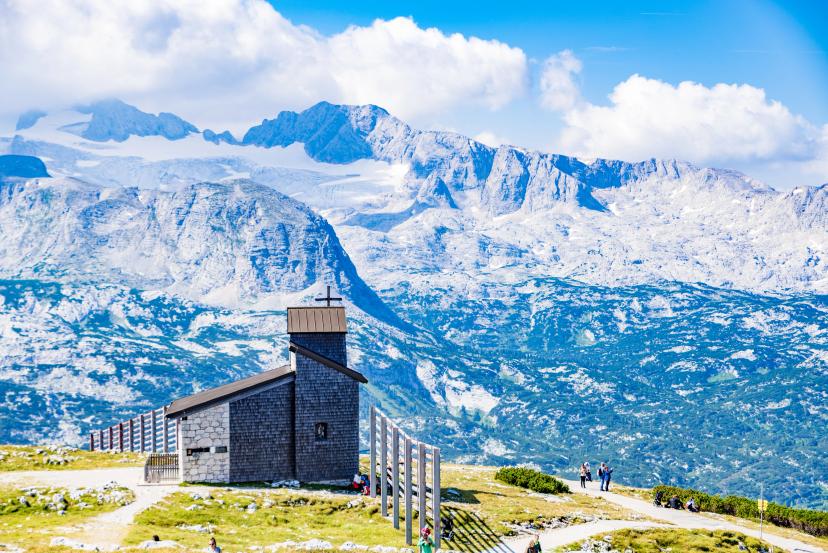
The Dachstein massif forms the highest mountain in the Northern Limestone Alps, creating dramatic scenery visible across central Austria while the surrounding Salzkammergut region offers gentle lake district summits.
Location: Border of Salzburg, Styria, and Upper Austria
Highest peak: Hoher Dachstein (2,995m)
Character: Highest limestone peaks combined with gentle Salzkammergut summits - broadest difficulty spectrum
Unique feature: Only glacier in the Northern Limestone Alps (Dachstein Glacier)
Geological note: Extensive karst formations, cave systems, sinkholes on plateau areas
Historical significance: Dachstein south face is one of Eastern Alps' most impressive limestone walls (1,000m vertical)
Main Peaks of the Region:

Schafberg (1,783m)
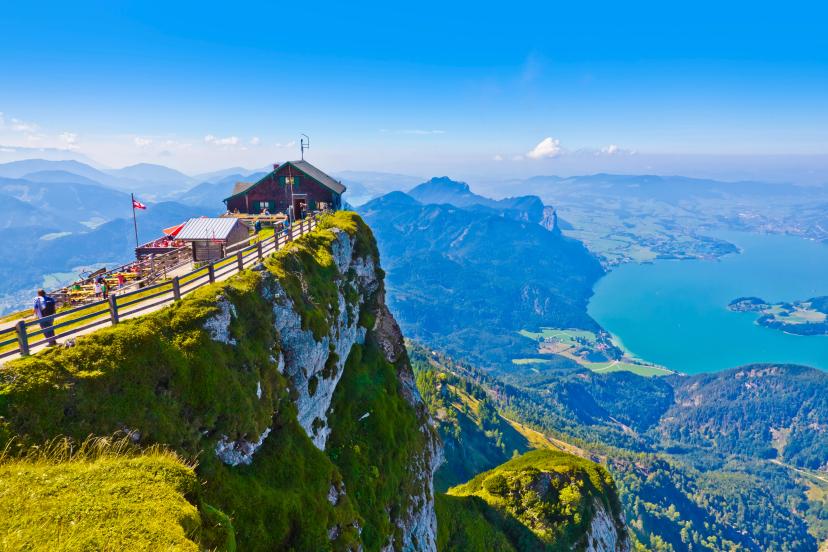
The most accessible Alpine summit in Austria, Schafberg offers a well-maintained hiking trail suitable for any fitness level willing to invest 3-4 hours. Alternatively, a historic cog railway from 1893 carries visitors to the summit with zero effort required. The 360-degree panorama encompasses 13 Salzkammergut lakes, the Dachstein massif, and on clear days, views extending to the Bavarian Alps. Perfect for families, first-time summit hikers, or rest-day peaks during longer treks. Non-technical. Best season: May-October. Ascent: 3-4 hours hiking or cog railway.

Torstein (2,317m)
This accessible Dachstein region peak offers panoramic views without the exposure and technical demands of the main Dachstein summit. The hiking trail from Gablonzer Hütte involves moderate elevation gain on well-maintained paths with minimal exposure. The summit looks directly across to the Dachstein's dramatic south face and provides views extending across the Ennstal valley. Excellent acclimatization peak before attempting more challenging summits. Non-technical. Best season: June-October. Ascent time: 2-3 hours from Gablonzer Hütte.

Hoher Gjaidstein (2,317m)
This dramatic limestone pyramid in the Schladminger Tauern offers a challenging scramble with sustained exposure and technical sections requiring confident rock handling. The route from Giglachseen lakes involves steep scree, exposed ridges, and several sections of Grade II scrambling. The summit position provides spectacular views of the Dachstein's north face and the entire Schladminger Tauern range. Advanced level—only for very experienced scramblers with head for heights. Best season: July-September.
For inspiration on combining these peaks with multi-day treks, see our Top 5 Treks in Austria.
Technical Peaks for Experienced Mountaineers
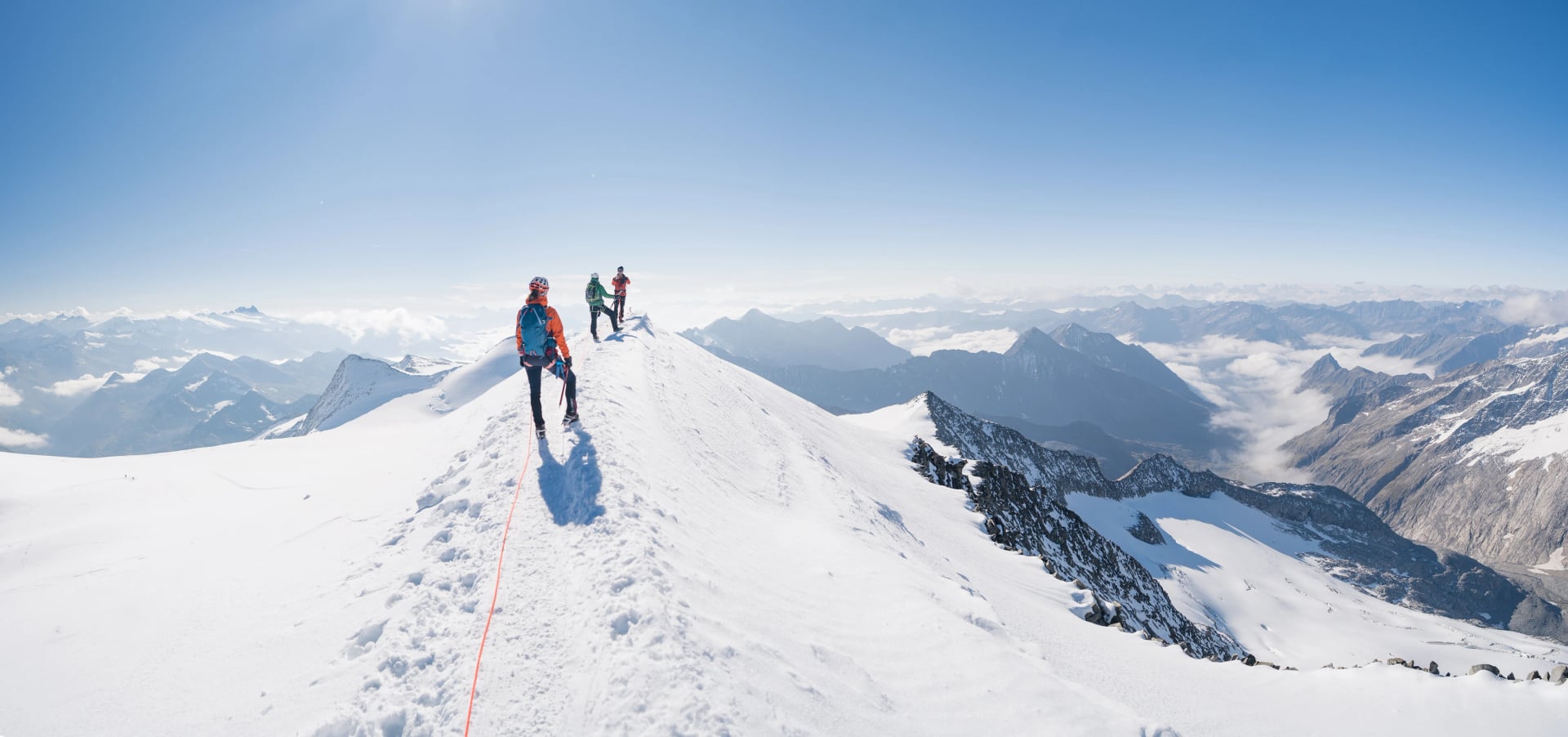
Austria's three most coveted summits require full mountaineering skills—glacier travel with rope and crampons, ice axe proficiency, crevasse rescue knowledge, and often rock climbing ability on exposed ridges. These are serious Alpine objectives where weather windows, fitness, and technical competence determine success and safety.
Main Peaks of the Region:

Wildspitze (3,768m)
Austria's second-highest peak offers a more accessible technical objective than Grossglockner—the glacier terrain is less steep and less crevassed, making it a popular "first big Alpine peak" for mountaineers building experience. The route from Breslauer Hütte crosses moderate-angle glacier with some crevasse zones, reaching twin summits connected by a glaciated saddle. Most parties complete the ascent in 4-5 hours from the hut. Requires: Basic glacier skills, crampon use, rope travel.

Großvenediger (3,657m)
The "gentle giant" of the Hohe Tauern, Großvenediger involves extensive glacier travel but on moderate terrain without the rock climbing demands of Grossglockner. The approach from Kürsinger Hütte crosses the Schlatenkees glacier for several kilometers, requiring solid rope skills and crevasse awareness. The isolated position and prominent summit create extraordinary views across the Venediger Group. Often considered the most beautiful of Austria's major peaks. Requires: Glacier travel experience, rope skills, navigation.

Grossglockner (3,798m)
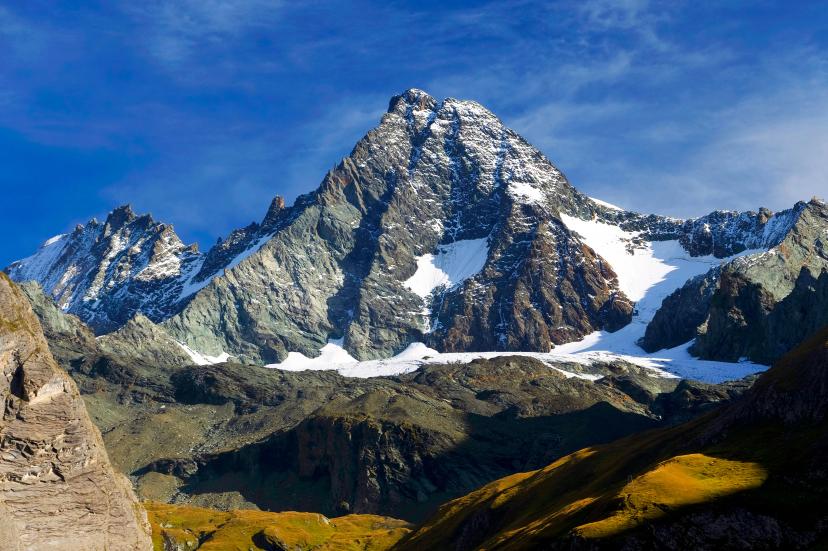
The Grossglockner rises to 3,798 meters, standing as Austria's highest mountain and the centerpiece of the Hohe Tauern range. Its pyramidal form and prominent position above the Pasterze Glacier have made it a focal point of Austrian alpine history since the first recorded ascent in 1800. The normal route involves glacier travel and exposed rock ridges, requiring technical alpine skills. The mountain's visibility from valleys across Carinthia and Tyrol gives it constant geographic presence in the Eastern Alps.
Our tours do not include technical mountaineering, as these peaks require specialized guiding, equipment, and skills beyond standard hut-to-hut trekking. However, we can arrange custom experiences that combine our established hut-to-hut routes with guided technical summit attempts coordinated with certified Austrian mountain guides.
Get in touch to discuss tailored itineraries incorporating these technical objectives.
Ready to Summit Austria's Peaks?
Best months: July-early September for non-technical peaks; late June-July for technical glaciated peaks. Fitness requirements vary from moderate (Schafberg's 3-4 hours) to extreme (Birkkarspitze's 8-10 hour scrambles). Via ferrata equipment rentals available in most mountain towns.
Browse all tours or schedule a meeting with us to discuss which summits suit your experience level.
The peaks are calling—time to answer.

Explore Austria’s top trekking routes, from iconic high Alpine circuits to remote wilderness hikes, with expert insights on difficulty, seasons, and highlights
7 min read
Read moreFrom accessible valley lodges to dramatic high-altitude refuges, discover Austria's most spectacular mountain huts across six distinct Alpine regions.
8 min read
Read more